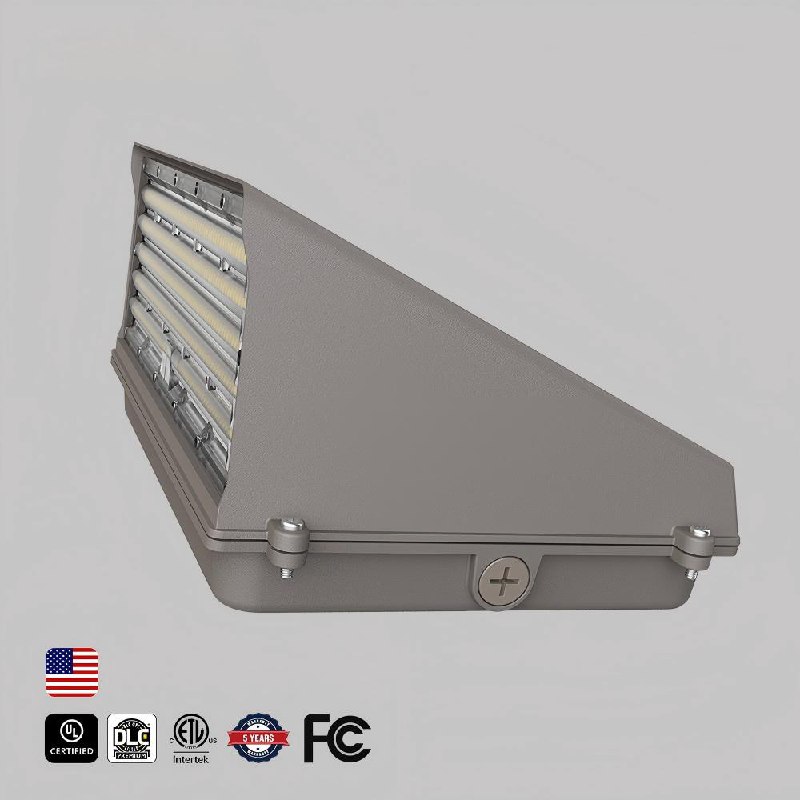
LED Wall Pack Lights for Commercial Security

LED wall pack lights are essential fixtures for commercial building exterior lighting, providing security, safety, and architectural accent illumination. These versatile outdoor lighting fixtures mount directly to building walls and project light outward to illuminate perimeters, walkways, and entry points.

What Are LED Wall Pack Lights?

Wall pack lights are outdoor lighting fixtures designed for mounting on building walls. They project light outward and downward to illuminate areas around commercial buildings, providing security lighting for parking lots, walkways, building entrances, and loading docks.

📊 Key Benefits of LED Wall Packs

  • 💰 Energy Savings: 50-70% reduction compared to MH/HPS
  • ⏰ Long Lifespan: 50,000+ hours maintenance-free
  • ⚡ Instant On/Off: No warm-up, sensor compatible
  • 🌧️ Durability: IP65 rated for all weather
  • 🔒 Security: Bright illumination deters crime
  • 🔧 Low Maintenance: No bulb changes for 10+ years

Types of LED Wall Pack Lights

🔷 Full Cutoff

All light directed downward. Required for Dark Sky compliance.

Best for: Residential areas, Dark Sky zones

🔷 Semi-Cutoff

Some light upward. Balance of coverage and control.

Best for: General commercial use

🔷 Forward Throw

Light projected away from building at an angle.

Best for: Walkways, parking edges

🔷 Architectural

Decorative design with functional lighting.

Best for: Hotels, restaurants, retail

Recommended LED Wall Pack Lights

HAROLUX offers a complete range of LED wall packs for commercial security lighting:

Model Wattage Lumens Features
SS-WK07 20W-100W 2,800-14,000 lm Full Cutoff, Dark Sky
SS-WK08 20W-120W 2,800-16,800 lm 140 lm/W, High Efficiency
SS-WK06 40W-120W 5,600-16,800 lm Selectable Wattage/CCT
Slim Series 25W-60W 3,500-8,400 lm Low Profile, Modern

LED Wall Pack Light Specifications

HAROLUX SS-WK08 High Efficiency Wall Pack – 140 lm/W


Wall Pack Lighting Applications

🏢 Building Perimeter

100-150W full cutoff at 20-30 ft spacing

🚗 Garage Entrances

50-100W above doors and drive lanes

🚪 Building Entrances

Required at every door for code compliance

🚛 Loading Docks

150-200W for safe night operations

📐 Light Level Recommendations

Application Foot-Candles Fixture Spacing
Building Perimeter 0.5-1.0 fc 50-75W 25-35 ft
High Security 2.0-5.0 fc 100-150W 15-20 ft
Building Entrances 5.0-10.0 fc 50-100W Per door
Loading Docks 10.0-20.0 fc 150-200W Per bay

💰 Energy Savings Calculator

Converting from 175W MH to 50W LED:

⚡ Energy Savings: 71%
💵 Annual Cost: $460 → $130/year
📅 Payback: 1.5-2 years
🔧 Maintenance: $100+/year saved

*Based on 10 fixtures, $0.12/kWh, 12 hrs/day

🌙 Dark Sky Compliance

Why Dark Sky Matters

  • ✅ No upward light pollution
  • ✅ Reduces glare and light trespass
  • ✅ Preserves night sky visibility
  • ✅ Protects wildlife ecosystems

HAROLUX SS-WK06/07 are Dark Sky compliant.


❓ Wall Pack Lighting FAQ

What wattage do I need?

General perimeter: 50-75W. High-security: 100-150W.

Are they waterproof?

Yes, IP65 rated – protected against dust and water jets.

Do they include photocells?

SS-WK07 includes integrated photocell for dusk-to-dawn operation.

🔗 Related Products

📞 Get a Free Security Lighting Design

Free Photometric Analysis

Our engineering team provides complimentary lighting layouts for your project.

Contact HAROLUX →

Last updated: March 2026

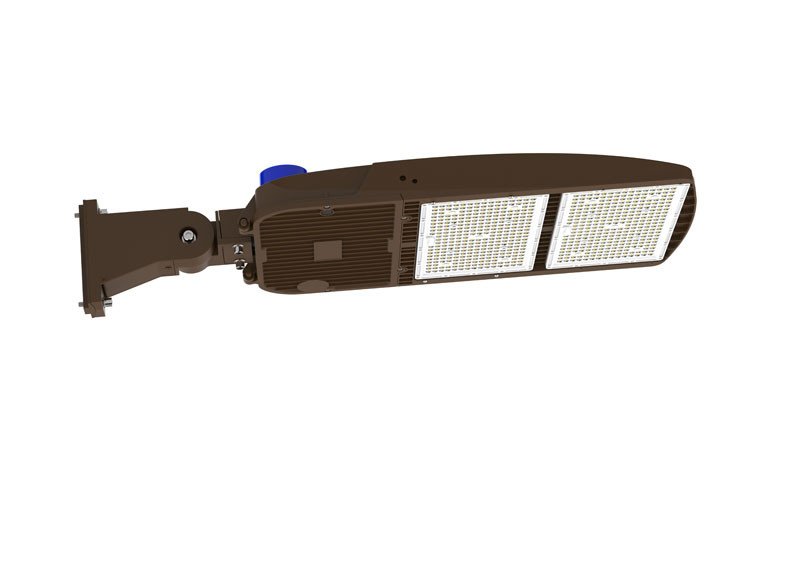
LED Shoebox Lights for Parking Lot

Parking lot lighting is essential for commercial properties, providing safety, security, and visibility for customers and employees. LED parking lot lights have revolutionized outdoor area lighting with their superior energy efficiency, long lifespan, and excellent light quality.

Why LED Parking Lot Lights?

LED shoebox lights and area lights are the modern standard for parking lot illumination. Compared to traditional metal halide or high-pressure sodium fixtures, LED parking lot lights offer:

📊 LED Parking Lot Lighting Benefits

  • 💰 Energy Savings: 50-70% reduction in energy costs
  • ⏰ Long Lifespan: 50,000-100,000 hours of operation
  • ⚡ Instant On/Off: No warm-up time, ideal for motion sensors
  • 👁️ Better Visibility: 70+ CRI for improved security
  • 🔧 Low Maintenance: Fewer bulb replacements
  • 🌿 Eco-Friendly: Less light pollution

Types of Parking Lot Lights

1. Shoebox Lights

Rectangular fixtures mounted on poles for wide, even illumination.

Best for: Large parking lots, shopping centers

2. Post Top Lights

Decorative fixtures combining functionality with aesthetics.

Best for: Pedestrian areas, retail centers

3. Garage Lights

Vapor tight fixtures for covered parking structures.

Best for: Parking garages, underground lots

Recommended LED Parking Lot Lights

HAROLUX offers high-performance LED shoebox lights for commercial parking lots:

Model Wattage Lumens Coverage
SS-AR07-100 100W 14,000 lm ~4,000 sq ft
SS-AR07-200 200W 28,000 lm ~8,000 sq ft
SS-AR07-300 300W 42,000 lm ~12,000 sq ft
SS-AR07-400 400W 56,000 lm ~16,000 sq ft

LED Shoebox Light Specifications


Parking Lot Lighting Design Guide

📐 Recommended Light Levels (IESNA)

Parking Type Min (fc) Avg (fc) Uniformity
Basic Parking 0.2 fc 0.5 fc 4:1
Standard Commercial 0.5 fc 1.0 fc 3:1
Shopping Centers 1.0 fc 2.0 fc 3:1
High Security 2.0 fc 5.0 fc 2:1

📏 Pole Height & Spacing

  • 12-15 ft poles: Small lots, 150W fixtures
  • 20-25 ft poles: Commercial lots, 200-300W fixtures
  • 30-40 ft poles: Large lots, 400W+ fixtures
  • Spacing rule: 4-5x pole height between fixtures

💰 Energy Savings Calculator

Converting from 400W MH to 150W LED:

⚡ Energy Savings: 62.5%
💵 Annual Cost: $1,750 → $650/year
📅 Payback: 2-3 years
🔧 Maintenance: $500+/year saved

*Based on 10 fixtures, $0.12/kWh, 12 hrs/day

Parking Lot Lighting Applications

🛒 Shopping Centers

Bright, uniform lighting to attract customers

🏢 Office Buildings

Employee safety during early/late hours

🏨 Hotels

24/7 illumination for guest safety

🏥 Healthcare

Highest light levels for emergency access


❓ Parking Lot Lighting FAQ

How many lights do I need?

Rule of thumb: one 200W LED per 4,000-6,000 sq ft. Contact us for free photometric analysis.

Best color temperature?

4000K for commercial, 5000K for high-security areas.

Are they Dark Sky compliant?

Yes, many HAROLUX shoebox lights feature full cutoff optics.

🔗 Related Products

📞 Get a Free Lighting Design

Free Photometric Analysis

Our team provides complimentary lighting layouts for your parking lot project.

Contact HAROLUX →

Last updated: March 2026

Vapor tight LED lights are essential lighting solutions for harsh environments where moisture, dust, and extreme conditions are present. This guide covers the best applications for vapor tight fixtures and how to choose the right one for your specific needs.

What Are Vapor Tight LED Lights?

Vapor tight lights, also known as vapor proof or sealed fixtures, are designed to prevent moisture, dust, and contaminants from entering the housing. With IP65 or higher ratings, these fixtures are ideal for wet locations and harsh industrial environments.

Key Features of Vapor Tight Fixtures

  • IP65/IP66 Rating: Complete protection against dust and water jets
  • Sealed Housing: Prevents moisture ingress and corrosion
  • Wide Temperature Range: Operates in extreme hot and cold conditions
  • Impact Resistant: Durable construction for industrial use
  • NSF Certified Options: Food-safe for processing facilities

Applications for Vapor Tight LED Lights

1. Car Wash Lighting

Car wash facilities require lighting that can withstand constant water exposure, chemicals, and humidity. Vapor tight LED lights are the ideal solution for:

  • Self-serve wash bays
  • Automatic tunnel washes
  • Vacuum stations
  • Equipment rooms

Recommended: HAROLUX VT Series Vapor Tight Lights with IP65 rating for continuous water exposure.

2. Parking Garage Lighting

Underground and covered parking structures face moisture, exhaust fumes, and temperature fluctuations. Vapor tight fixtures provide reliable illumination with minimal maintenance.

  • Underground parking levels
  • Covered parking structures
  • Entry and exit ramps
  • Stairwells and elevators

Benefits: Reduced maintenance costs, uniform illumination, long lifespan in damp conditions.

3. Food Processing Lighting

Food processing and beverage production facilities require lighting that meets strict hygiene standards. NSF-certified vapor tight lights prevent contamination and withstand washdown procedures.

  • Meat and poultry processing
  • Dairy production
  • Beverage bottling
  • Commercial kitchens

Requirements: NSF certification, IP66+ rating, chemical resistance for cleaning agents.

4. Parking Lot and Carport Lighting

Outdoor covered areas like parking lots and carports benefit from weather-resistant vapor tight fixtures that can handle rain, snow, and temperature extremes.

  • Apartment complex carports
  • Shopping center parking
  • Commercial building entrances
  • Drive-through lanes

5. Industrial and Warehouse Lighting

Manufacturing facilities, warehouses, and industrial plants often have areas with dust, humidity, or chemical exposure. Vapor tight lights provide reliable illumination in these challenging environments.

  • Manufacturing floors
  • Chemical storage areas
  • Loading docks
  • Equipment maintenance areas

6. Agriculture and Livestock Lighting

Barns, greenhouses, and agricultural facilities require lighting that can handle dust, humidity, and ammonia exposure from animal waste.

  • Livestock barns
  • Poultry houses
  • Greenhouses
  • Milking parlors

Vapor Tight Light Selection Guide

Application IP Rating Needed Wattage Range Special Requirements
Car Wash IP65+ 25-60W Chemical resistant
Parking Garage IP65 35-60W Linkable design
Food Processing IP66+ 35-50W NSF certified
Industrial IP65 40-100W Dust resistant
Agriculture IP65+ 35-60W Ammonia resistant

Why Choose HAROLUX Vapor Tight Lights?

The HAROLUX VT Series offers:

  • IP65 Waterproof Rating: Protected against water jets from any direction
  • Wattage Selectable: 25W/35W/45W options in a single fixture
  • Color Temperature Selectable: 3500K/4000K/5000K for different applications
  • Linkable Design: Connect multiple fixtures for continuous runs
  • 5-Year Warranty: Reliable performance backed by industry-leading warranty

Product Specifications

Model Wattage Lumens Length IP Rating
VT-25 25W 3,250 lm 2ft IP65
VT-35 35W 4,550 lm 4ft IP65
VT-45 45W 5,850 lm 4ft IP65

Related Products

For comprehensive lighting solutions in wet and harsh environments:

Get a Quote for Your Project

Whether you need lighting for a car wash, parking garage, or food processing facility, our team can help you select the right vapor tight solution. Contact HAROLUX for a free consultation.

Last updated: March 2026

LED Wall Pack FAQ

LED Wall Pack Frequently Asked Questions

What is an LED wall pack light?

An LED wall pack light is an outdoor lighting fixture designed to be mounted on building walls. It uses LED technology to provide efficient illumination for building perimeters, parking areas, loading docks, and security applications. LED wall packs typically replace older metal halide or high-pressure sodium fixtures.

How many watts do I need for a wall pack?

Wall pack wattage depends on mounting height and application. For 10-12 ft mounting, use 20-40W. For 12-16 ft, use 40-60W. For 16-24 ft, use 60-100W. For heights above 24 ft, consider 100-120W fixtures. Higher mounting requires more wattage to achieve the same ground-level illumination.

What is the difference between full cutoff and forward throw wall packs?

Full cutoff wall packs direct all light downward at or below 90 degrees, preventing light pollution and trespass. They’re required in dark-sky communities. Forward throw wall packs project light further from the building at angles above 90 degrees, providing wider coverage for parking areas and large perimeters.

How long do LED wall packs last?

Quality LED wall packs have a rated lifespan of 50,000+ hours. At 12 hours of daily operation, this translates to over 11 years of service. Unlike metal halide lamps that gradually dim over time, LEDs maintain consistent output throughout their lifespan.

Are LED wall packs waterproof?

Most commercial LED wall packs are rated IP65 or higher, meaning they’re dust-tight and protected against water jets. This makes them suitable for outdoor use in all weather conditions, including heavy rain, snow, and coastal environments with salt spray.

What color temperature should I choose?

For most commercial applications, 4000K (neutral white) provides balanced illumination. 5000K (daylight) offers higher visibility for security applications. 3000K (warm white) is suitable for residential-adjacent properties where light trespass is a concern.

Can LED wall packs be used with photocells?

Yes, most LED wall packs are compatible with photocells for automatic dusk-to-dawn operation. Many models include built-in photocells or have knockouts for external sensor installation. Photocell control can reduce energy consumption by ensuring lights only operate when needed.

How do I calculate energy savings from LED wall packs?

LED wall packs typically save 60-70% compared to metal halide fixtures. A 100W LED replacing a 250W metal halide saves approximately $157 per year at $0.12/kWh with 12-hour daily operation. Payback periods are typically 1-2 years for commercial installations.

What is a selectable CCT wall pack?

Selectable CCT wall packs allow you to choose between multiple color temperatures (typically 3000K, 4000K, 5000K) using an internal switch. This flexibility lets one fixture model serve different applications without ordering separate SKUs.

Do LED wall packs require maintenance?

LED wall packs require minimal maintenance compared to traditional fixtures. There are no bulbs to replace, and the solid-state construction is highly reliable. Occasional cleaning of the lens may be needed in dusty environments. Most manufacturers offer 5-year warranties.

What voltage do LED wall packs use?

Most commercial LED wall packs operate on 120-277V input, making them compatible with standard commercial electrical systems. Some models are also available in 347V or 480V for industrial applications. Always verify voltage compatibility before installation.

Can LED wall packs be dimmed?

Some LED wall pack models are dimmable using 0-10V dimming protocols. Dimming capability is useful for applications where light levels can be reduced during low-activity periods to save energy. Not all models support dimming – check specifications before purchasing.

What is the beam angle of a wall pack?

LED wall packs typically have beam angles of 100-120 degrees horizontal and 60-90 degrees vertical, creating a Type IV distribution pattern. This provides a forward-throw pattern ideal for illuminating areas away from the building wall.

How high should wall packs be mounted?

Wall packs are typically mounted at 10-25 ft above ground level. Lower mounting (10-15 ft) works for entrances and small areas. Medium mounting (15-20 ft) suits loading docks and garages. Higher mounting (20-25 ft) is used for building perimeters and parking areas.

What is the difference between LED wall packs and flood lights?

Wall packs are designed specifically for wall mounting with a fixed aiming angle, while flood lights offer adjustable aiming and can be mounted on poles or walls. Wall packs typically have a wider, more uniform distribution pattern for perimeter lighting, while flood lights provide focused, directional illumination.

Are LED wall packs dark-sky compliant?

Full cutoff LED wall packs are dark-sky compliant as they direct all light downward, preventing light pollution. Look for IDA (International Dark-Sky Association) certification or full cutoff designation if dark-sky compliance is required in your area.

Can LED wall packs be used in cold climates?

Yes, LED wall packs perform well in cold climates. Most are rated for operation down to -40°C (-40°F). Unlike fluorescent lights that lose efficiency in cold temperatures, LEDs actually perform slightly better in cooler conditions.

What certifications should I look for?

For commercial applications, look for UL or ETL listing for safety, DLC (DesignLights Consortium) qualification for utility rebates, and IP65 or higher for weather resistance. CE and RoHS certifications indicate compliance with European standards.

How do I choose between wall pack models?

Consider: (1) Required illumination level and mounting height, (2) Full cutoff vs. forward throw optics, (3) Energy efficiency (LM/W), (4) Color temperature needs, (5) Physical size and aesthetics, (6) Certifications required, (7) Budget and warranty.

Can wall packs be used for security camera lighting?

Yes, wall packs provide excellent illumination for security cameras. Use 5000K color temperature for best camera performance and facial recognition. Ensure even coverage without harsh shadows. Consider motion sensor integration for energy savings and to alert security when activity is detected.

What is the IP rating for outdoor wall packs?

IP65 is the minimum recommended rating for outdoor wall packs, providing dust-tight protection and resistance to water jets. IP66 and IP67 ratings offer even higher protection against heavy rain and temporary submersion, suitable for extreme weather environments.

How far apart should wall packs be spaced?

Space wall packs 1.5-2 times the mounting height apart. For example, at 15 ft mounting height, space fixtures 22-30 ft apart. Adjust spacing based on desired light levels and uniformity requirements. Overlap beam patterns by 20% for even coverage.

Can I retrofit existing wall pack housings with LED?

LED retrofit kits are available for converting existing wall pack housings to LED. These kits include an LED array and driver that fit into the existing housing. However, new LED wall packs often provide better thermal management and longer lifespan than retrofits.

What warranty do LED wall packs have?

Quality commercial LED wall packs typically come with 5-year warranties from reputable manufacturers. Some premium models offer 7-10 year warranties. Check warranty terms carefully – they may vary based on operating hours and environmental conditions.

Where can I buy commercial LED wall packs?

Commercial LED wall packs are available from lighting distributors, electrical wholesalers, and directly from manufacturers like HAROLUX. For commercial projects, contact HAROLUX for factory-direct pricing and technical support.

Related Products

Published: March 2026

LED Wall Pack Light Guide

What is an LED Wall Pack Light?

LED wall pack lights are outdoor lighting fixtures mounted on building walls for perimeter, security, and area lighting. They replace traditional metal halide and high-pressure sodium fixtures with energy-efficient LED technology, delivering 60-70% energy savings while providing superior illumination.

LED Wall Pack Wattage Guide

Choose the right wattage based on your application and mounting height:

Wattage Lumens Mounting Height Application
20W-30W 2,600-3,900 LM 8-12 ft Small entrances, alcoves
40W-60W 5,200-8,400 LM 12-18 ft Loading docks, garages
80W-100W 10,400-14,000 LM 16-24 ft Building perimeters
120W 16,800 LM 18-28 ft Large parking areas

Types of LED Wall Packs

Full Cutoff Wall Packs

Full cutoff fixtures direct all light downward, preventing light trespass and reducing sky glow. Required in many municipalities with dark-sky ordinances. Best for properties near residential areas.

Forward Throw Wall Packs

Forward throw optics project light further from the building, ideal for parking areas and large perimeter applications where wider coverage is needed.

Slim Wall Packs

Low-profile design for applications with limited wall space or aesthetic requirements. Often used in commercial buildings where appearance matters.

LED Wall Pack Applications

Warehouse & Distribution Centers

Wall-mounted fixtures provide essential lighting for loading docks, entrances, and perimeter security. 60W-100W models suit most warehouse applications.

Parking Garages

Wall packs eliminate the need for ceiling penetrations and provide even illumination on driving surfaces. 40W-60W fixtures at 8-12 ft mounting work well for most garages.

Commercial Buildings

Building perimeter lighting enhances security and aesthetics. Full cutoff fixtures prevent light from spilling into neighboring properties.

Security Lighting

Bright, reliable illumination deters crime and improves surveillance camera performance. Consider 5000K color temperature for maximum visibility.

Installation Guidelines

Mounting Height

Install wall packs at 10-25 ft above ground level. Higher mounting requires higher wattage to achieve desired light levels at ground level.

Fixture Spacing

Space fixtures 1.5-2 times the mounting height apart for uniform coverage. For example, fixtures at 15 ft height should be spaced 22-30 ft apart.

Electrical Requirements

  • Input voltage: 120-277V (most commercial LED wall packs)
  • Dedicated circuit recommended for large installations
  • Consider photocell for dusk-to-dawn operation
  • Motion sensor integration for energy savings

LED vs. Metal Halide Comparison

Feature LED Metal Halide
Efficacy 130-140 LM/W 60-80 LM/W
Lifespan 50,000+ hrs 15,000-20,000 hrs
Warm-up Time Instant 5-10 minutes
Maintenance Minimal Regular bulb replacement
Energy Cost Low High

Related Products

Published: March 2026
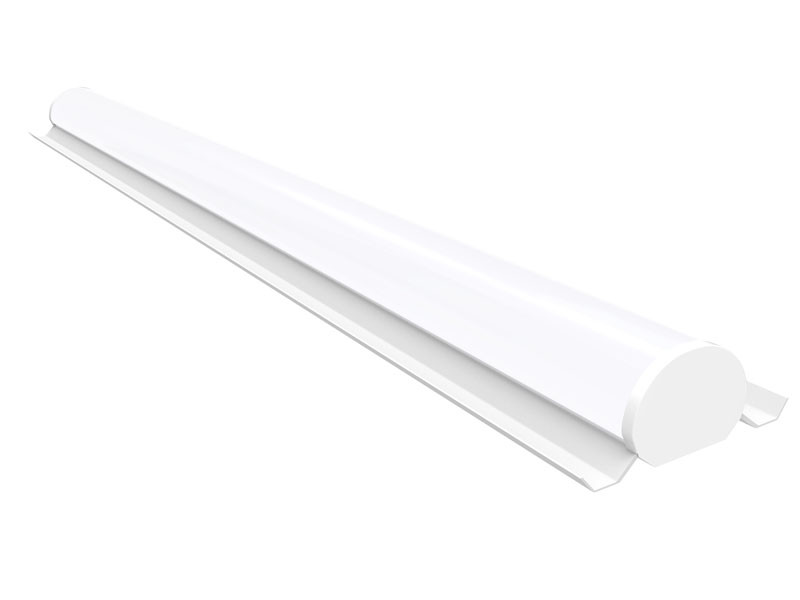
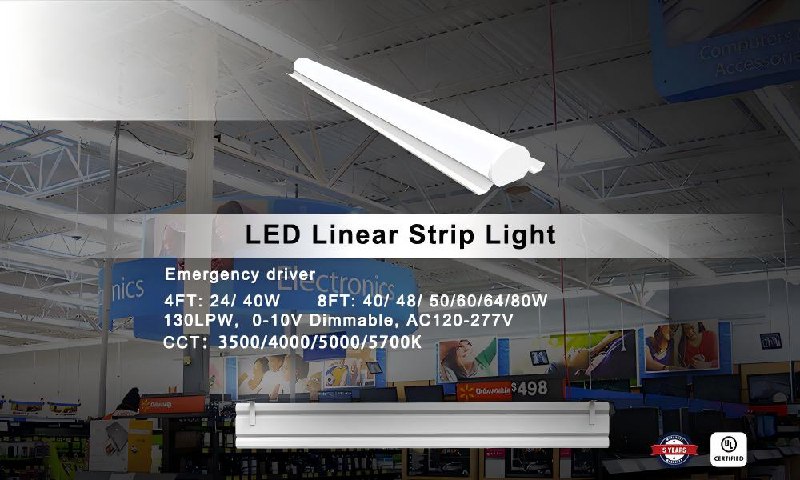
Retrofit LED Strip Light for T8/T12 Replacement

Upgrading from fluorescent T8 or T12 tubes to LED doesn’t require replacing entire fixtures. Retrofit LED strip lights install directly into existing fluorescent housings, cutting energy costs by 50-60% while delivering better light quality. This guide shows you how.

Bottom Line: Retrofit LED strips offer the fastest, most cost-effective path to LED lighting. Typical payback: 1.5-3 years. No ceiling modifications required.

What is a Retrofit LED Strip Light?

A retrofit LED strip light is designed to replace fluorescent tubes in existing strip fixtures. Unlike new LED fixtures, retrofit strips:

  • Fit existing housings – Same mounting brackets, same dimensions
  • Bypass ballast – Connect directly to line voltage
  • Upgrade efficiency – 130 LM/W vs 80-90 LM/W for fluorescent
  • Eliminate maintenance – No tube changes, no ballast replacements

T8/T12 Fluorescent vs Retrofit LED: Comparison

Feature T8 Fluorescent T12 Fluorescent Retrofit LED
Power (4ft) 32W + 8W ballast 40W + 10W ballast 40W (no ballast loss)
Lumens 2,800 LM 2,500 LM 5,200 LM
Efficacy 70-80 LM/W 50-60 LM/W 130 LM/W
Lifespan 15,000-20,000 hrs 12,000-15,000 hrs 50,000+ hrs
Start Time 1-3 seconds 2-5 seconds Instant
Maintenance Replace tubes every 2-3 yrs Replace tubes every 1-2 yrs None for 10+ yrs
Mercury Yes (disposal required) Yes (disposal required) None

Who Should Choose Retrofit LED Strips?

✅ Best Candidates for Retrofit:

  • Existing fluorescent fixtures in good condition – Housings, lenses, and brackets are intact
  • Limited renovation budget – Retrofit costs 30-50% less than new fixtures
  • Minimal disruption required – Installation takes 15-20 minutes per fixture
  • Historic or preserved spaces – Maintain existing ceiling appearance
  • Large-scale upgrades – Volume discounts on retrofit strips reduce per-unit cost

❌ Consider New Fixtures Instead When:

  • Existing housings are damaged or corroded
  • Complete renovation planned anyway
  • Different fixture style desired (e.g., suspended vs surface mount)
  • Need advanced features like integrated sensors or emergency backup

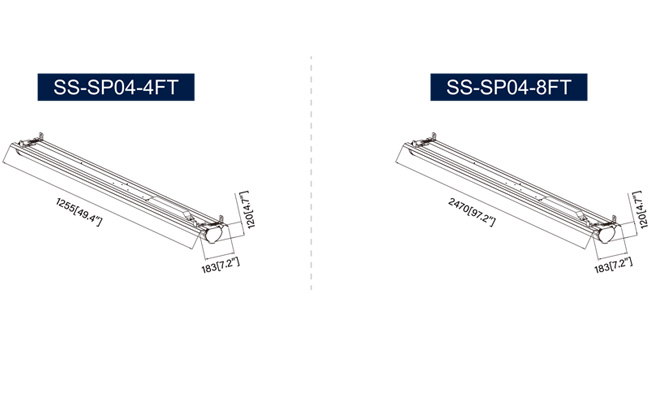
Retrofit LED Strip Light Specifications

Retrofit LED Strip Light Specifications

Specification 4ft Model 8ft Model
Wattage 40W 80W
Lumens 5,200 LM 10,400 LM
Efficacy 130 LM/W 130 LM/W
Color Temp 3500K/4000K/5000K 3500K/4000K/5000K
Voltage AC120-277V AC120-277V
CRI >80 >80
Power Factor >0.95 >0.95
Lifespan 50,000+ hrs 50,000+ hrs
Certifications UL/ETL/DLC/CE UL/ETL/DLC/CE
Warranty 5 years 5 years

Step-by-Step Installation Guide

⚠️ Safety First: Always disconnect power at the circuit breaker before working on electrical fixtures. Verify power is off with a non-contact voltage tester.

Step 1: Gather Tools & Materials

  • Non-contact voltage tester
  • Screwdriver (flathead and Phillips)
  • Wire strippers/cutters
  • Wire nuts or Wago connectors
  • Ladder or lift
  • PPE (safety glasses, gloves)

Step 2: Remove Fluorescent Tubes

Carefully remove all fluorescent tubes from the fixture. Set aside for proper recycling—they contain mercury and should not be thrown in regular trash.

Step 3: Disconnect & Remove Ballast

Locate the ballast (usually a metal box inside the fixture). Note: Some installations may have ballasts at a central location rather than in each fixture.

Disconnect the ballast wires:

  • Black (hot) and white (neutral) from power supply
  • Wires to tombstones (tube sockets)

Remove the ballast entirely, or leave in place with wires disconnected. Some contractors leave the ballast in the housing to avoid creating a hole.

Step 4: Rewire Tombstones

Connect line voltage directly to the tombstones:

  • Black (hot) → One end of the strip (typically marked “LINE” or “HOT”)
  • White (neutral) → Other end of the strip (typically marked “NEUTRAL” or “N”)
💡 Note: Retrofit LED strips use single-end wiring on most models. Follow the specific wiring diagram included with your fixture.

Step 5: Mount the Retrofit Strip

Most retrofit strips use the same mounting brackets as the original fluorescent fixture:

  • Slide the LED strip into the existing brackets, or
  • Attach included mounting clips to the housing

Step 6: Make Electrical Connections

Connect the retrofit strip wires to the power supply:

  • Black to black (hot)
  • White to white (neutral)
  • Green or bare copper to ground

Use wire nuts or Wago connectors. Ensure all connections are tight and no exposed copper is visible.

Step 7: Restore Power & Test

Turn the circuit breaker back on. The LED strip should light immediately. If not:

  • Check connections
  • Verify the dimmer (if present) is not at minimum
  • Check that the fixture is wired to the correct circuit

Energy Savings Calculator

Retrofit LED Installation

Calculate your savings when upgrading from fluorescent to retrofit LED:

Scenario Fluorescent Retrofit LED Savings
4ft T8 (100 fixtures) $2,102/yr $1,261/yr $841/yr (40%)
8ft T12 (50 fixtures) $1,971/yr $1,051/yr $920/yr (47%)
2-lamp T8 HO (100) $2,628/yr $1,682/yr $946/yr (36%)

*Based on 12 hrs/day, 365 days/year, $0.12/kWh. Actual savings vary by usage and local rates.

Common Questions

Do I need an electrician?

If you’re comfortable with basic electrical work (changing outlets, installing light fixtures), you can install retrofit LED strips. Otherwise, hire a licensed electrician. Installation typically takes 15-20 minutes per fixture.

What if my ballast is compatible?

Some electronic ballasts work with LED tubes, but most retrofit strips require ballast bypass. Running LED strips through a ballast will cause flickering, reduced life, or immediate failure. Always follow the manufacturer’s instructions.

Can I dim retrofit LED strips?

Standard retrofit strips are non-dimmable. If you need dimming, specify 0-10V dimmable models when ordering. These require additional wiring for the dimming circuit.

What about emergency lighting?

Retrofit strips can be paired with external emergency battery backup units. For new installations requiring emergency lighting, consider new LED fixtures with integrated emergency drivers.

How do I dispose of fluorescent tubes?

Fluorescent tubes contain mercury and must be recycled properly. Contact your local waste management facility or use services like lamprecycle.org to find recycling locations.

Why Choose HAROLUX Retrofit LED Strips?

  • 130 LM/W High Efficacy – Maximum light output per watt
  • Direct Replacement – Fits existing fluorescent housings
  • Universal Voltage – AC120-277V works with most circuits
  • 50,000 Hour Life – 10+ years maintenance-free
  • Full Certifications – UL, ETL, DLC, CE compliant
  • 5-Year Warranty – Manufacturer-backed reliability
  • Factory Direct Pricing – OEM manufacturer since 2010

Ready to Upgrade?

Transform your fluorescent lighting to high-efficiency LED in hours, not days. Contact HAROLUX for:

  • Free lighting assessment
  • Custom payback calculations
  • Volume pricing for large projects
  • Technical support for installation

Request a Quote →

Related Resources

Last updated: March 2026

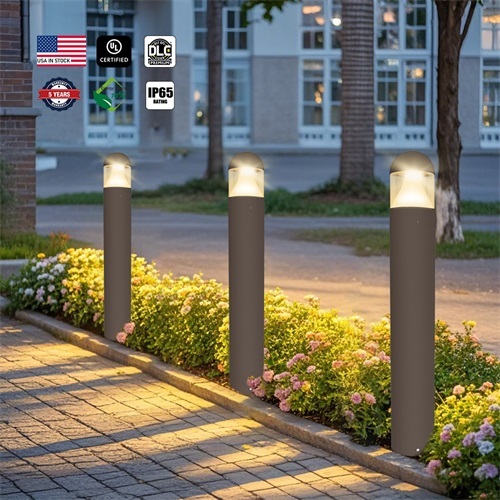
LED Bollard Light for Landscape and Pathway

A single 24W LED bollard light produces 3,600 lumens—enough to illuminate a 4-meter pathway section while consuming 80% less energy than traditional halogen fixtures.

This comprehensive guide covers everything you need to know about selecting, spacing, and installing LED bollard lights for professional landscape and pathway lighting applications.

This guide covers:

  • How to choose the right height and wattage
  • Proper spacing calculation methods
  • IP rating explained
  • Six design styles and architectural coordination
  • Installation methods for different surfaces

1. What is a LED Bollard Light?

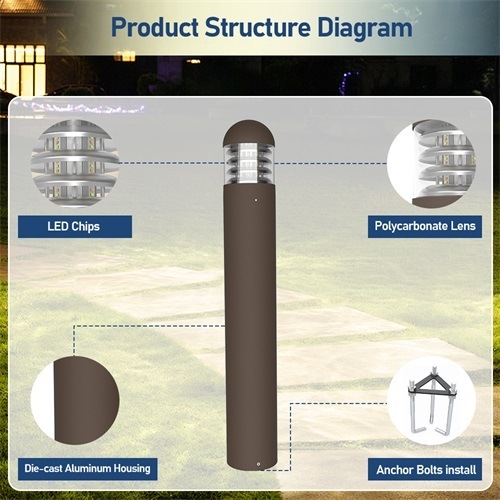
A LED bollard light is a short, post-type outdoor lighting fixture designed for pathways, landscapes, and architectural accent lighting. Typically standing 600mm to 1200mm tall, bollard lights provide low-level illumination that guides pedestrians safely while adding visual interest to outdoor spaces. Unlike overhead lighting, bollard lights deliver light at eye level, reducing glare and creating intimate, inviting atmospheres. Modern LED bollards like the HAROLUX SS-BD Series combine energy efficiency with architectural aesthetics, offering multiple design options within a single product line.

  • Post-type fixture 600mm-1200mm tall
  • Low-level pathway and landscape illumination
  • Reduces glare vs overhead lighting
  • Architectural accent element
  • Modern LED versions 80%+ more efficient

2. LED Bollard Light Applications

LED bollard lights serve diverse applications across commercial, municipal, and residential environments. **Commercial Landscapes**: Office parks, shopping centers, and hospitality venues benefit from professional-grade illumination that enhances property value and visitor safety. The 3600 lumen output covers 15-20 square meters per fixture. **Public Pathways**: Parks, campuses, and municipal walkways require reliable, low-maintenance lighting. IP65-rated fixtures withstand harsh outdoor conditions while delivering consistent performance. **Hospitality & Resorts**: Hotel grounds, restaurant patios, and spa areas benefit from decorative yet functional lighting that extends usable outdoor hours. **Residential Communities**: HOA developments and private gardens use bollard lights to define boundaries and create safe passage between amenities.

  • Commercial landscapes: offices, retail, hospitality
  • Public pathways: parks, campuses, municipal
  • Hospitality: hotels, restaurants, resorts
  • Residential: HOAs, private gardens
  • 15-20 sqm coverage per 24W fixture

3. How Tall Should Bollard Lights Be?

Bollard height directly affects illumination coverage and visual impact. **600-800mm (24-31 inches)**: Best for decorative accent lighting, garden borders, and low-level pathway markers. Creates pools of light for visual interest rather than continuous illumination. **800-1000mm (31-39 inches)**: Standard height for pedestrian pathways. Provides optimal balance between coverage and glare control. Most common specification for commercial projects. **1000-1200mm (39-47 inches)**: Maximum standard height for pathway lighting. Used in larger landscapes where fixtures serve as both lighting and wayfinding elements. **Custom Heights**: Available for special applications. Taller bollards (1500mm+) approach column-light territory and serve architectural statement purposes. The HAROLUX SS-BD Series offers customizable heights from 600mm to 1500mm to match project requirements.

  • 600-800mm: Decorative accent, garden borders
  • 800-1000mm: Standard pathway lighting
  • 1000-1200mm: Large landscapes, wayfinding
  • Custom heights available
  • Balance coverage vs glare control

4. Bollard Light Spacing Guide

Proper spacing ensures uniform illumination without dark spots or excessive overlap. **General Rule**: Space fixtures 3-4 times the mounting height. For a 1000mm bollard, spacing should be 3-4 meters between fixtures. **Continuous Pathway Lighting**: For even illumination along walkways, use closer spacing (3x height). Example: 800mm bollards at 2.4-meter intervals create seamless coverage. **Accent/Pools of Light**: For dramatic effect, increase spacing to 5-8 meters. Creates defined light circles that guide movement through landscape. **Staggered Installation**: For wide pathways (over 3 meters), alternate fixtures left and right. This technique provides better coverage than single-line installation. **Height Factor**: Taller bollards cast light further, allowing wider spacing. A 1200mm bollard can be spaced up to 5 meters apart while maintaining coverage. Request a photometric layout for precise spacing calculations on your specific project.

  • 3-4x mounting height standard spacing
  • Closer (3x) for continuous coverage
  • Wider (5-8m) for accent effect
  • Stagger for paths over 3m wide
  • Taller bollards = wider spacing possible

5. IP Rating and Weather Resistance

Outdoor bollard lights face rain, dust, temperature extremes, and UV exposure. Understanding IP ratings ensures you select fixtures that will survive your climate. **IP65 Rating** (Standard for quality bollards): Completely dust-tight. Protected against water jets from any direction. Suitable for most outdoor applications including heavy rain. **IP66 Rating**: Enhanced protection against powerful water jets. Recommended for areas with pressure washing or extreme weather. **IP67 Rating**: Temporary submersion protection. Rarely needed for bollard lights unless in flood-prone areas. **Temperature Range**: Quality fixtures operate from -30°C to +50°C (-22°F to 122°F). Critical for northern climates with freezing winters and desert regions with extreme heat. **Corrosion Resistance**: For coastal areas, specify marine-grade powder coating or aluminum with enhanced corrosion protection. Standard finishes may degrade in salt spray environments within 2-3 years.

  • IP65: Dust-tight, water jet resistant
  • IP66: High-pressure water protection
  • Temperature range: -30°C to +50°C
  • Coastal: Marine-grade coating required
  • UV resistance prevents yellowing

6. Selectable Power and Color Temperature

Modern LED bollard lights offer selectable settings that increase versatility and reduce inventory requirements. **Selectable Wattage** (14W/19W/24W): Choose power output based on application. Lower settings for accent lighting, maximum for primary pathway illumination. One fixture covers multiple brightness requirements. **Selectable CCT** (3000K/4000K/5000K): Color temperature affects mood and functionality. 3000K warm white creates inviting atmosphere for hospitality and residential. 4000K neutral white suits commercial and public spaces. 5000K daylight provides maximum visibility for safety-critical areas. **Selection Methods**: Internal DIP switches (common), external switches (easier access), or remote programming (smart fixtures). Verify accessibility before installation—some require disassembly to adjust. The HAROLUX SS-BD Series features internal switches for both power and CCT selection.

  • 14W/19W/24W power selectable
  • 3000K/4000K/5000K CCT selectable
  • One SKU covers multiple applications
  • Internal switches for adjustment
  • Reduces inventory complexity

7. Design Options and Architectural Coord

Bollard lights serve both functional and aesthetic purposes. Selecting designs that complement architecture enhances overall project cohesion. **Design Considerations**: Modern/minimalist structures suit clean cylinder or square profiles. Traditional architecture pairs with decorative or fluted designs. Transitional styles accommodate both contemporary and classic elements. **Material Finishes**: Powder-coated aluminum in standard colors (black, bronze, grey). Custom RAL colors for brand coordination. Stainless steel for premium or coastal applications. **Head Styles**: Flat top (minimalist), dome (classic), angled (modern), fluted (decorative), mushroom (soft), square (contemporary). **Coordinating Fixtures**: Many manufacturers offer path lights, spot lights, and wall lights in matching designs. Specify a product line rather than individual fixtures for unified aesthetics.

  • Match design to architectural style
  • Standard finishes: black, bronze, grey
  • Custom colors for brand coordination
  • Six head styles available
  • Coordinate with other landscape fixtures

Technical Specifications Reference

LED Bollard Light Specifications

Conclusion

LED bollard lights provide efficient, durable illumination for landscapes and pathways. By selecting appropriate height, spacing, and design, you can create safe, inviting outdoor spaces that enhance property value and user experience.

Learn about LED Bollard Light SS-BD Series →

Expert answers to the most common questions about LED bollard lights for landscape and pathway lighting applications.

Q: What is a LED bollard light?

A: A LED bollard light is a short post-type outdoor lighting fixture, typically 600mm-1200mm tall, designed for pathway and landscape illumination. Named after marine bollards (ship mooring posts), these fixtures provide low-level lighting that guides pedestrians safely while adding architectural interest to outdoor spaces. Modern LED versions like the HAROLUX SS-BD Series produce 3600 lumens from just 24W.

Q: How tall should bollard lights be?

A: Standard bollard heights: 600-800mm for decorative accent lighting, 800-1000mm for typical pathway illumination (most common), 1000-1200mm for large landscapes and wayfinding. Choose height based on coverage needed and visual proportions with surrounding architecture. Taller bollards cast light further but may create more glare.

Q: How far apart should bollard lights be spaced?

A: Space bollard lights 3-4 times the mounting height. For a 1000mm bollard, space 3-4 meters apart for continuous illumination. For accent/pools of light effect, increase spacing to 5-8 meters. For wide pathways over 3 meters, stagger fixtures left and right for better coverage.

Q: How many lumens do bollard lights need?

A: Pathway bollards typically produce 1000-5000 lumens. For pedestrian pathways, 2000-3000 lumens per fixture provides adequate visibility. For commercial spaces requiring higher light levels, 3000-5000 lumens is appropriate. The HAROLUX SS-BD Series delivers 3600 lumens, suitable for most commercial and municipal applications.

Q: What IP rating do outdoor bollard lights need?

A: IP65 is the standard for quality outdoor bollard lights—completely dust-tight and protected against water jets. IP66 provides enhanced protection for areas with pressure washing. For coastal or flood-prone areas, consider IP67 or specify marine-grade construction.

Q: Can LED bollard lights be used in coastal areas?

A: Yes, but specify marine-grade construction. Standard powder-coated aluminum may corrode in salt spray environments within 2-3 years. Look for enhanced corrosion-resistant finishes, 316 stainless steel hardware, and sealed electrical compartments. IP66+ rating recommended.

Q: What color temperature is best for landscape lighting?

A: 3000K warm white creates inviting atmosphere for hospitality and residential applications. 4000K neutral white suits commercial and public spaces. 5000K daylight provides maximum visibility for safety-critical areas. Many modern bollards offer selectable CCT to match requirements.

Q: How do I install bollard lights?

A: Three common methods: Surface mount (bolt-down base plate for concrete), ground stake (for soft ground like gardens), or recessed anchor (for new concrete pours). Most quality bollards include mounting hardware for surface installation. Underground conduit required for electrical supply.

Q: Do bollard lights need a foundation?

A: For surface-mounted bollards on existing concrete, a properly secured base plate is sufficient. For new installations in soft ground, concrete footings prevent settling and tipping. Footing depth should be 300-600mm depending on soil conditions and frost line.

Q: Can bollard lights be dimmed?

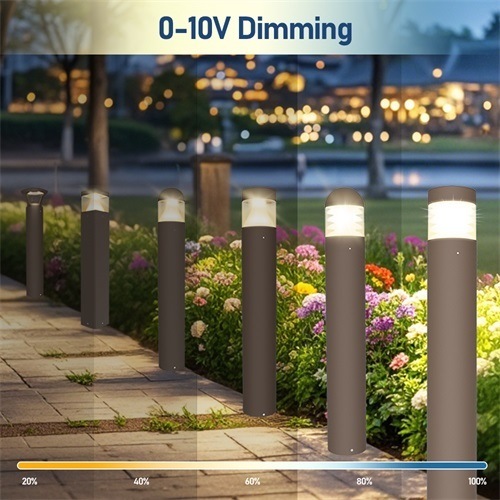
A: Some LED bollard lights support 0-10V dimming for integration with landscape lighting control systems. Standard fixtures operate on/off only. If dimming is required, specify this when ordering—retrofitting is typically not possible.

Q: How long do LED bollard lights last?

A: Quality LED bollard lights are rated for 50,000+ hours. At 8 hours per night operation, that’s over 17 years. Unlike traditional bulbs, LEDs gradually dim rather than fail suddenly, giving advance notice for replacement planning.

Q: What maintenance do LED bollard lights require?

A: Minimal maintenance. Clean lenses annually with mild soap and water. Check seals and gaskets every 2-3 years. No lamp replacements for 10+ years. In harsh environments (coastal, industrial), inspect annually for corrosion and seal degradation.

Q: Are bollard lights vandal-resistant?

A: Quality bollard lights feature die-cast aluminum or steel construction that withstands typical impact. Look for IK08+ impact rating for high-traffic public areas. Tamper-resistant hardware and sealed compartments protect electrical components.

Q: What voltage do bollard lights require?

A: Most commercial LED bollard lights operate on 120-277V AC for North American markets. Some models offer 120-347V for Canadian applications. Low-voltage (12V/24V) versions available for residential DIY installations using landscape transformers.

Q: Can I use bollard lights for security lighting?

A: Bollard lights provide pathway illumination and area presence, but are not primary security lighting. For security applications, combine with motion-activated flood lights or integrate bollards with microwave sensors for responsive illumination.

Q: What’s the difference between bollard and path lights?

A: Bollard lights are taller (600mm+) and provide 360° or wide distribution for area coverage. Path lights are shorter (300-500mm) and typically focus light downward in a narrower pattern. Bollards suit larger areas; path lights work for defined walkways.

Q: Do bollard lights come with photocells?

A: Some models include built-in photocells for automatic dusk-to-dawn operation. Others offer photocell as an option. For centralized control systems, specify bollards without photocells to avoid conflicts. The HAROLUX SS-BD Series offers photocell as an optional feature.

Q: How do I calculate how many bollard lights I need?

A: Calculate pathway length divided by spacing distance, plus one. Example: 50-meter pathway with 4-meter spacing = 50 ÷ 4 = 12.5, round up to 13 fixtures. For complex layouts, request a photometric study that accounts for fixture output, mounting height, and required light levels.

Q: What certifications should I look for?

A: For North America: UL or ETL safety listing (required for code compliance), DLC qualification (for utility rebates). For wet locations, verify wet location rating. CE and RoHS for international projects. IP rating should be independently verified.

Q: Can bollard lights have motion sensors?

A: Yes, some LED bollard lights offer integrated microwave or PIR motion sensors. Microwave sensors detect movement through materials and work well in enclosed spaces. PIR sensors require line-of-sight. Motion sensors reduce energy consumption in low-traffic areas.

Q: What’s the typical lead time for bollard lights?

A: Stock items ship within 1-2 weeks. Custom colors or heights require 4-8 weeks. Large project orders (100+ units) typically 6-10 weeks. Plan early for new construction projects—order fixtures during rough-in phase to ensure timely delivery.

Q: Do you offer bulk pricing for bollard lights?

A: Yes, manufacturers typically offer tiered pricing: 10-49 units at standard pricing, 50-99 units at 5-10% discount, 100+ units at 15-20% discount. Contact suppliers with project specifications for custom quotations.

Q: Can bollard lights be customized?

A: Custom options include height (600mm-1500mm+), color (custom RAL matching), engraving or logo branding, special optical distributions, and unique head designs. Minimum order quantities apply for custom items, typically 20-50 units.

Q: How do I choose a bollard design?

A: Match the design style to your architecture: modern/minimalist buildings suit clean cylinders or squares; traditional styles pair with decorative or fluted designs; transitional architecture accommodates both. Consider the fixture as a daytime visual element, not just nighttime lighting.

Q: What warranty do LED bollard lights have?

A: Quality LED bollard lights come with 5-year warranties. Premium products may offer extended warranties up to 7-10 years. Verify warranty covers both LED array and driver, and check terms for environmental exclusions (coastal, industrial).

产品规格参考

LED Bollard Light Specifications

了解 LED Bollard Light SS-BD Series →

HAROLUX LED Shoebox Lights

Expert answers to the most common questions about LED shoebox lights for parking lots, streets, and area lighting.

Q: What is a LED shoebox light?

A: A LED shoebox light is a rectangular outdoor lighting fixture designed for parking lots, streets, and large area illumination. Named for its shoebox-like shape, it mounts on poles via slip-fitter brackets and provides directional light through Type II or Type III distribution patterns. Wattages range from 100W to 500W.

Q: Why is it called a shoebox light?

A: The fixture gets its name from its rectangular, box-like shape that resembles a shoebox. This form factor houses the LED array, driver, and thermal management components while providing a sleek, low-profile appearance on poles.

Q: What wattage LED shoebox do I need for a parking lot?

A: Most commercial parking lots use 200W-300W shoebox lights. A 300W fixture at 20-foot mounting height covers approximately 60×80 feet at 5 foot-candles. For smaller lots or lower mounting (15 feet), 150W-200W may suffice. Large lots with 25+ foot mounting may require 400W-500W. Get a photometric layout for precise sizing.

Q: How many lumens does a 300W LED shoebox produce?

A: A quality 300W LED shoebox light produces 45,000 lumens at 150 lm/W efficacy. This is equivalent to a 1000W metal halide fixture which produces about 45,000-50,000 lumens initially (but degrades to 35,000 within 2 years).

Q: What is Type II distribution?

A: Type II distribution produces a rectangular light pattern with a width-to-length ratio up to 1:1.5. It’s designed for narrow roadways, parking lanes, and walkways where fixtures are placed in the center of the illuminated area. Light extends forward and to both sides equally.

Q: What is Type III distribution?

A: Type III distribution creates a wider rectangular pattern with a width-to-length ratio up to 1:2. It’s ideal for larger parking lots and areas where fixtures are placed at the perimeter. Light projects further into the space from the fixture location.

Q: Type II vs Type III—which do I need?

A: For standard parking lots with poles in driving lanes, Type II provides optimal uniform coverage. For perimeter lighting where fixtures mount on building edges or property boundaries, Type III distributes light further into the space. Many fixtures offer interchangeable lenses so you can select during installation.

Q: How far apart should parking lot lights be spaced?

A: For uniform coverage, space fixtures 3-4 times the mounting height apart. At 20 feet mounting height, space 60-80 feet apart. At 25 feet, space 75-100 feet apart. Exact spacing depends on required light level, distribution type, and fixture output—always get a photometric layout.

Q: What is a slip-fitter mount?

A: A slip-fitter is a cylindrical mounting bracket that slides onto a round pole tenon (typically 2 3/8″ or 60mm diameter). It’s the most common mounting for shoebox lights, allowing 15-30° tilt adjustment for precise aiming. Secure with set screws after positioning.

Q: What voltage do LED shoebox lights require?

A: Most LED shoebox lights operate on 120-277V AC, covering standard 120V commercial and 277V industrial circuits. High-voltage models (277-480V) are available for large industrial and municipal installations. Always verify voltage compatibility before purchasing.

Q: Can LED shoebox lights replace metal halide fixtures?

A: Yes! LED shoebox lights are ideal replacements for 250W-1000W metal halide fixtures. A 100W LED replaces 250W MH, 150W-200W LED replaces 400W MH, and 300W LED replaces 1000W MH. Benefits: 70% energy savings, instant on/off, 50,000+ hour life, no color shift, better cold-weather performance.

Q: How much energy do LED shoebox lights save?

A: LED shoebox lights typically save 60-75% compared to metal halide. Replacing a 1000W MH with 300W LED running 12 hours/day saves about $368/year per fixture at $0.12/kWh. A 20-fixture parking lot saves over $7,000 annually. Additional savings from reduced maintenance and rebates.

Q: Do LED shoebox lights qualify for utility rebates?

A: Yes, DLC-listed LED shoebox lights qualify for rebates in most utility territories. Typical rebates range from $50-150 per fixture for parking lot lighting. Some utilities offer higher rebates for controls integration. Check with your local utility’s commercial efficiency program.

Q: How long do LED shoebox lights last?

A: Quality LED shoebox lights are rated for 50,000-100,000 hours of operation. At 12 hours/day, that’s 11-23 years. Unlike metal halide, LEDs don’t fail suddenly—they gradually dim over time. L70 rating (70% of original output) is typically 50,000+ hours.

Q: What IP rating do shoebox lights need?

A: IP65 is standard for outdoor shoebox lights—dust-tight and protected against water jets. IP66 provides additional protection for areas with heavy rain or pressure washing. For coastal environments, look for corrosion-resistant finishes and IP66+ ratings.

Q: Can LED shoebox lights work with motion sensors?

A: Yes, many shoebox lights support microwave or PIR motion sensors. Microwave sensors detect movement through materials (ideal for enclosed structures) while PIR sensors work line-of-sight. Motion sensors can reduce energy use 30-70% in applications with variable traffic patterns.

Q: What is a photocell and do I need one?

A: A photocell is a light sensor that automatically turns fixtures on at dusk and off at dawn. For outdoor parking lot and street lighting, photocells are essential to avoid wasting energy during daylight. Most shoebox lights have built-in photocell ports or offer photocell as a factory option.

Q: What certifications should I look for?

A: For North America: UL or ETL safety listing (required for code compliance) and DLC qualification (for utility rebates). For international: CE and RoHS compliance. Look for 5-year warranty minimum. For municipal projects, verify Buy American compliance if required.

Q: Can LED shoebox lights be dimmed?

A: Many LED shoebox lights support 0-10V dimming for integration with building automation systems. Dimming extends fixture life, reduces energy use during low-traffic periods, and enables flexible lighting levels. Not all fixtures are dimmable—verify before purchasing.

Q: What maintenance do LED shoebox lights require?

A: Minimal maintenance. Clean lenses annually with mild soap and water. Inspect seals and gaskets every 2-3 years. No lamp replacements for 10+ years. In coastal or industrial environments, check for corrosion annually. Most issues are driver-related and covered under warranty.

Q: Can I use shoebox lights for street lighting?

A: Yes, LED shoebox lights are widely used for local streets, collector roads, and alleys. Select Type II distribution for roadways. Verify compliance with IESNA RP-8 roadway lighting standards. For high-traffic arterial roads, consider dedicated LED street lights with Type V distribution.

Q: What color temperature is best for parking lots?

A: 5000K (daylight) is most popular for parking lots—bright, clear illumination that enhances visibility and security camera performance. 4000K (neutral white) provides a softer appearance, suitable for retail centers with evening shopping. 3000K is generally too warm for large outdoor areas.

Q: What is surge protection and do I need it?

A: Surge protection devices (SPD) protect LED drivers from voltage spikes caused by lightning or grid switching. Recommended for all outdoor lighting in areas with lightning activity. A 10kV SPD is standard. In high-risk areas, 20kV protection provides additional safeguard.

Q: How do I calculate ROI for LED shoebox lights?

A: Calculate: (Old watts – New watts) × Hours/year ÷ 1000 × Rate = Annual savings. Subtract rebate for net cost. Divide net cost by annual savings for payback years. Example: (1000-300) × 4,380 ÷ 1000 × $0.12 = $368/year. With $400 fixture and $100 rebate: $300 ÷ $368 = 0.8 years payback.

Q: Can shoebox lights be used for sports fields?

A: For recreational fields (tennis courts, small baseball fields), 400W-500W shoebox lights on 25-30 foot poles can provide adequate illumination. For competitive sports or larger fields, dedicated LED sports lighters with higher output and narrower beam angles are recommended.

相关产品:HAROLUX LED Shoebox Lights

HAROLUX LED Shoebox Lights

A 300W LED shoebox light produces 45,000 lumens—equivalent to a 1000W metal halide fixture—while consuming 70% less energy and lasting 2.5 times longer.

This comprehensive guide covers everything you need to know about selecting, installing, and optimizing LED shoebox lights for parking lots, streets, and large area illumination applications.

1. What is a LED Shoebox Light?

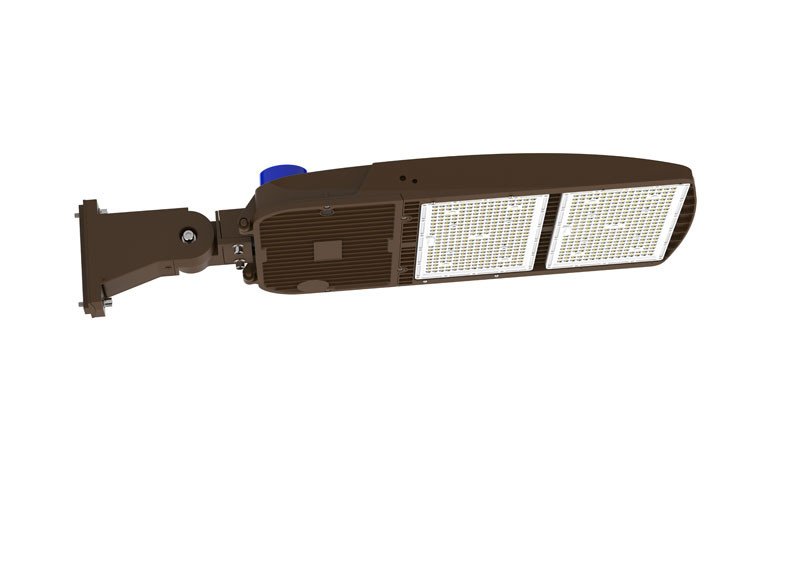
A LED shoebox light is a rectangular outdoor lighting fixture designed for area illumination in parking lots, streets, and large outdoor spaces. Named for its shoebox-like shape, this fixture typically mounts on poles via slip-fitter brackets and delivers directional light through Type II or Type III distribution patterns. Shoebox lights range from 100W to 500W, producing 15,000 to 75,000 lumens. The rectangular housing houses LED arrays, a driver, and thermal management components. Modern shoebox lights achieve 150+ lumens per watt efficacy, making them ideal replacements for 250W-1000W metal halide and high-pressure sodium fixtures. Key advantages include instant on/off operation, no warm-up time, superior color rendering, and 50,000+ hour lifespan.

  • Rectangular fixture for parking lots and streets
  • Mounts on poles via slip-fitter (2 3/8″ tenon)
  • 100W-500W, 15,000-75,000 lumens
  • 150+ lm/W efficacy
  • Replaces 250W-1000W metal halide

2. Type II vs Type III Distribution: Which Do You Need?

Distribution pattern determines how light spreads from the fixture. Choosing the right pattern is critical for uniform illumination and minimizing light trespass. **Type II Distribution** produces a rectangular pattern with a width-to-length ratio of up to 1:1.5. Light extends forward and to the sides, making it ideal for narrow roadways, parking lanes, and walkways. Use Type II when fixture spacing is 2-3 times the mounting height. **Type III Distribution** creates a wider rectangular pattern with a width-to-length ratio of up to 1:2. It’s designed for larger parking lots and areas where fixtures are placed near one side. Use Type III when you need to illuminate a wider area from a perimeter position. **Decision Guide**: For standard parking lots with fixtures on poles in driving lanes, Type II provides optimal coverage. For perimeter lighting where fixtures mount on building edges or property lines, Type III distributes light further into the space. Many shoebox lights offer interchangeable lenses so you can select the distribution pattern during installation.

  • Type II: Narrow pattern, parking lanes, 1:1.5 ratio
  • Type III: Wide pattern, large lots, 1:2 ratio
  • Type II for fixtures in driving lanes
  • Type III for perimeter mounting
  • Interchangeable lenses available

3. Wattage Selection: How Many Lumens Do You Need?

Proper wattage selection depends on area size, mounting height, required light level, and existing fixture spacing. **Parking Lots**: Most commercial parking lots require 5-10 foot-candles (50-100 lux) for customer safety and security. A 300W shoebox at 20-foot mounting height covers approximately 60×80 feet at 5 foot-candles. **Streets and Roadways**: Local streets typically need 0.5-1.5 foot-candles. Collector roads require 1.0-2.0 foot-candles. A 200W-300W shoebox on 25-30 foot poles with 100-150 foot spacing meets most requirements. **Wattage-to-Lumen Reference**: 100W = 15,000 lm (replaces 250W MH), 150W = 22,500 lm (replaces 400W MH), 200W = 30,000 lm (replaces 400W MH), 300W = 45,000 lm (replaces 1000W MH), 400W = 60,000 lm (large area coverage), 500W = 75,000 lm (high mast applications). **Spacing Rule**: For uniform coverage, space fixtures 3-4 times the mounting height apart. At 20-foot height, space 60-80 feet apart. Request a photometric layout for precise fixture count and placement.

  • Parking lots: 5-10 fc, 300W covers 60×80 ft
  • Streets: 0.5-2.0 fc per IESNA
  • Spacing: 3-4x mounting height
  • 300W replaces 1000W metal halide
  • Get photometric layout for accuracy

4. Mounting Options and Installation

Shoebox lights offer several mounting configurations to suit different pole types and applications. **Slip-Fitter Mount**: The most common option—a cylindrical bracket that slides onto a 2 3/8″ (60mm) round pole tenon. Allows 15-30° tilt adjustment. Standard on most shoebox lights. **Trunnion/Yoke Mount**: A U-shaped bracket for flat surfaces or walls. Ideal for building perimeters and security lighting where pole mounting isn’t available. Adjustable angle for precise aiming. **Adjustable Arm**: An extension arm that positions the fixture further from the pole. Reduces shadowing and allows setback from traffic lanes. **Pole Mount Considerations**: Verify pole diameter matches the slip-fitter (2 3/8″ is standard). Check wind load ratings—the EPA (Effective Projected Area) of the fixture plus wind speed determines if the pole is adequate. For retrofit projects, existing poles may need reinforcement. **Electrical Connection**: Most shoebox lights have a junction box with 1/2″ or 3/4″ knockouts. Wire through the pole or use conduit. 120-277V models work with standard 120V or 277V circuits. 277-480V models require higher voltage infrastructure.

  • Slip-fitter: 2 3/8″ round pole, most common
  • Trunnion: Wall or flat surface mounting
  • Check wind load and EPA ratings
  • 120-277V or 277-480V options
  • Junction box with standard knockouts

5. Energy Savings and ROI Calculation

LED shoebox lights deliver substantial energy savings compared to metal halide and high-pressure sodium fixtures. **Energy Savings Formula**: (Old watts – New watts) × Hours × 365 ÷ 1000 × Rate = Annual savings per fixture. **Example**: Replacing 1000W MH with 300W LED at 12 hours/day, $0.12/kWh: (1000 – 300) × 12 × 365 ÷ 1000 × $0.12 = $368/year savings per fixture. A 20-fixture parking lot saves $7,360 annually. **Additional Savings**: Reduced maintenance—no lamp replacements for 10+ years vs every 2 years for MH. No ballast failures. Lower HVAC load in enclosed structures. **Utility Rebates**: DLC-listed fixtures qualify for rebates in most utility territories. Typical rebates: $50-150 per fixture for parking lot lights. Contact your utility for current programs. **Payback Period**: At $368/year savings and $300-500 fixture cost, payback is 1-2 years. With rebates, payback can be under 12 months. For new construction, first cost is typically lower than MH due to fewer fixtures needed and smaller wire/breaker requirements.

  • 300W LED saves $368/year vs 1000W MH
  • 20 fixtures = $7,360/year savings
  • Rebates: $50-150 per fixture
  • Payback: 1-2 years, under 1 year with rebates
  • No maintenance for 10+ years

6. Motion Sensors and Smart Controls

Adding motion sensors and controls can increase energy savings by 30-70% in applications with variable traffic patterns. **Microwave Motion Sensors**: Detect movement through Doppler radar. Work through plastic and glass, making them suitable for enclosed fixtures. Adjustable detection range (up to 40 feet), hold time (5 seconds to 30 minutes), and daylight threshold. Ideal for parking structures and areas with intermittent traffic. **Photocells**: Enable dusk-to-dawn automatic operation. Essential for outdoor applications to avoid wasting energy during daylight. Most shoebox lights have built-in photocell ports or offer photocell as an option. **0-10V Dimming**: Allows stepless dimming from 10% to 100%. Compatible with building automation systems and external controllers. Use for after-hours reduced lighting or to extend fixture life. **Surge Protection**: Recommended for areas with lightning or grid instability. A 10kV surge protection device (SPD) protects the driver and extends fixture life. **Smart Controllers**: Enable remote monitoring, scheduling, and dimming via cellular or LoRaWAN networks. Monitor energy use, detect failures, and optimize operations from a central dashboard.

  • Motion sensors: 30-70% additional savings
  • Microwave works through materials
  • Photocells for dusk-to-dawn operation
  • 0-10V dimming for building automation
  • Surge protection in lightning-prone areas

Conclusion

LED shoebox lights provide efficient, long-lasting illumination for parking lots, streets, and large outdoor areas. By selecting the right wattage, distribution pattern, and controls, you can achieve 70% energy savings while improving light quality and reducing maintenance.

Explore HAROLUX LED Shoebox Lights →

相关产品:HAROLUX LED Shoebox Lights